PicoSure Pro
Pigment. Texture. A precise focus.
Picosecond laser used for pigment, skin revitalisation and tattoo work.
Your medical assessment determines suitability.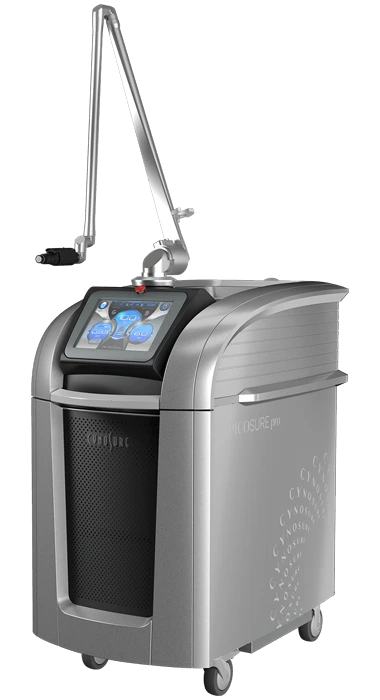
- 01755 nm picosecond energy
- 02Platinum Focus™ lens array
- 03Optional 532 / 1064 nm capability
Areas of application
Pigment · Texture & acne scars · Tattoo removal
An informed choice.
What the evidence can tell you — and where its limits matter.
Sources checkedEvidence & expectations
A prospective 20-person study of a 755 nm picosecond laser with a diffractive optic reported improvement in acne-scar texture. It was small and not a randomized comparison with another treatment. Its findings do not guarantee the same outcome with every lens, setting or PicoSure Pro indication.[1]
Preparation & recovery
Recent tanning, previous pigment changes and your usual skin care affect planning. Arrange sun protection and product-specific aftercare; a treatment setting or study schedule should not be copied as a personal prescription.[2]
Risks & limitations
Pigment can darken or lighten after an inflammatory procedure. Melasma can recur and needs an ongoing management plan; a laser is not a universal cure for brown patches. Establish the diagnosis before selecting the device.[2]
Compare your options
Compare a pigment-targeted treatment with a fractional texture treatment. Acne scars, tattoos and melasma are different problems; improving one does not establish effectiveness for the others.[1][2]
Different approaches to discuss
These links explain different targets. They are not personalised recommendations.
PicoSure Pro FocusPicoVSources & further reading
- Clinical study755 nm picosecond laser with a specialized optic for acne scarsBrauer et al. · JAMA Dermatology · 2015
- Professional guidanceMelasma: diagnosis and treatmentAmerican Academy of Dermatology
- Manufacturer informationPicoSure Pro: platform informationCynosureManufacturer information explains the platform or named protocol; it is not independent evidence of clinical benefit.
How we use evidence
A controlled trial compares interventions in defined groups; an uncontrolled cohort cannot, alone, establish causality. A review depends on the quality of its included studies. We distinguish these sources from manufacturer information and identify when findings do not directly apply to the platform or protocol.
The date records when sources were checked for this guide. It is not a statement of individual clinical review, product authorisation or confirmation of the clinic’s available configuration.
This guide supports a conversation with your clinician. It does not determine your suitability or replace individual aftercare instructions.
Where this technology fits.
Explore the treatment pathways that use this platform, including the sequence and what to discuss at your assessment.