PRP · Platelet-Rich Plasma
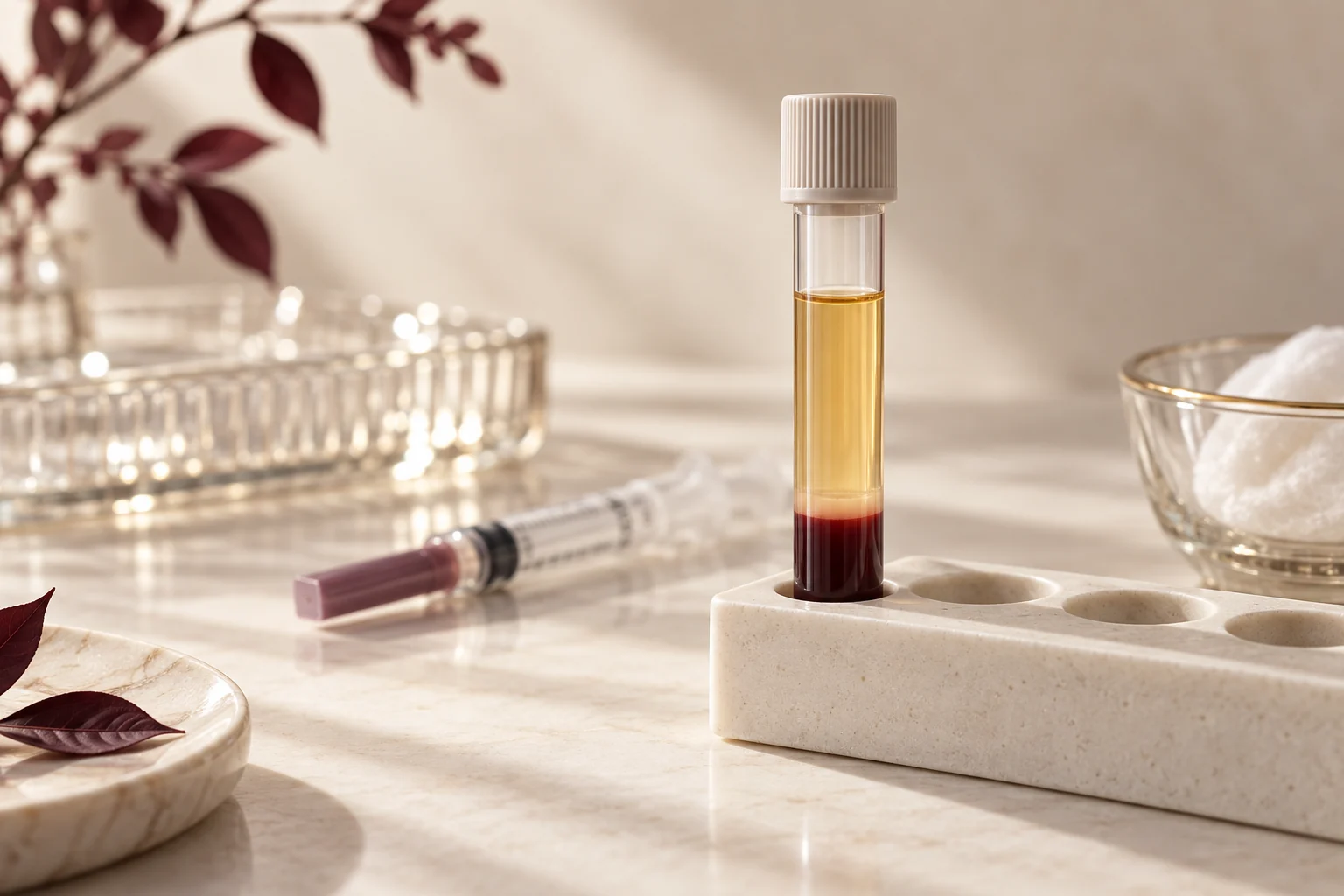
A preparation obtained from a sample of your own blood, with a concentrated platelet component. It may be discussed for selected skin or scalp concerns after the underlying issue has been assessed.
Your care, step by step.
Assess the concern
Clarify the skin or scalp concern and relevant medical history.
Collect & prepare
Collect a blood sample and prepare the platelet-rich fraction.
Apply & care
Use the agreed technique and receive aftercare instructions.
Review progress
Assess the response and discuss whether to continue.
What to plan for
Preparation methods and evidence vary by indication. The clinician explains the intended use, blood collection, application, recovery and how response will be reviewed.
The sequence, session count and intervals are agreed individually. This is a pathway, not a fixed calendar.
An informed choice.
What the evidence can tell you — and where its limits matter.
Sources checkedEvidence & expectations
Facial evidence is mixed. One randomized trial found patient-rated improvements in texture, while a later trial adding PRP to microneedling did not demonstrate a visible advantage over saline. Scalp evidence cannot be substituted for facial evidence.[1][2]
For androgenetic alopecia, a separate 25-patient randomized half-head trial found a hair-density benefit relative to placebo. This is indication-specific evidence, not a treatment for every cause of hair loss or proof of the same effect with every preparation.[3]
Preparation & recovery
Preparation systems, platelet composition and application vary between studies. Discuss the intended skin or scalp use and how progress will be documented rather than assuming one standard PRP protocol.[4]
Risks & limitations
Blood collection and injections can be uncomfortable and cause bruising. Using your own blood does not remove the need for sterile preparation or individual assessment. Ask about expected local effects and the follow-up contact.[2]
Compare your options
PRP and PRF are different preparations; neither is automatically superior. For skin texture, compare the blood-derived approach with options directed at the skin surface and the option of supportive care alone.[4]
For scalp concerns, diagnosis comes before a procedure. Discuss established medical options, including whether minoxidil is appropriate, rather than assuming hair shedding is always androgenetic alopecia.[5]
Different approaches to discuss
These links explain different targets. They are not personalised recommendations.
PRF · Platelet-Rich FibrinPicoSure Pro FocusSources & further reading
- Controlled clinical trialPRP for photoaged facial skin: randomized trialAlam et al. · JAMA Dermatology · 2018
- Controlled clinical trialPRP and microneedling for facial rejuvenation: randomized trialPincelli et al. · Plastic and Reconstructive Surgery Global Open · 2024
- Controlled clinical trialPRP for androgenetic alopecia: randomized half-head trialAlves & Grimalt · Dermatologic Surgery · 2016
- Systematic reviewPRP and PRF in facial rejuvenation: systematic reviewQin et al. · Annals of Plastic Surgery · 2025
- Professional guidanceHair loss: diagnosis and treatmentAmerican Academy of Dermatology
How we use evidence
A controlled trial compares interventions in defined groups; an uncontrolled cohort cannot, alone, establish causality. A review depends on the quality of its included studies. We distinguish these sources from manufacturer information and identify when findings do not directly apply to the platform or protocol.
The date records when sources were checked for this guide. It is not a statement of individual clinical review, product authorisation or confirmation of the clinic’s available configuration.
This guide supports a conversation with your clinician. It does not determine your suitability or replace individual aftercare instructions.
Start with your priorities.
Discuss suitability, alternatives, expected recovery and costs at your medical assessment.